Symbols
Public symbol systems such as road signs and hazard symbols: where each came from, what makes a symbol readable at a distance, and how readings vary by culture.
4 entries
-
Road Signs: A Red Triangle Means Danger Only by Treaty
Why warning signs are red triangles across much of Europe and yellow diamonds in the US: treaties from 1909 to 1968 set the shapes, and Vienna allows both.
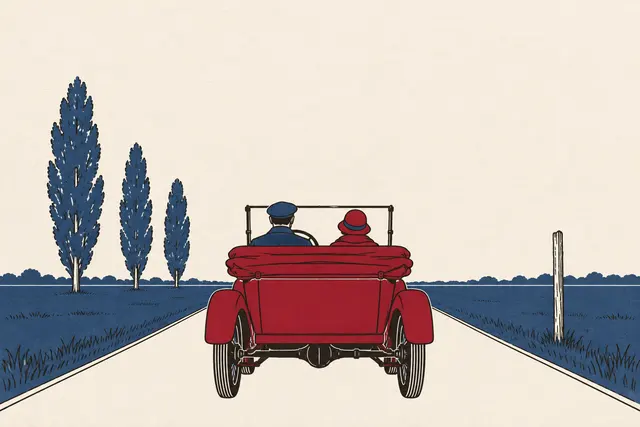 Illustration
Picture credit
Illustration: Codes & Letters. Generated schematic image — not a photograph or historical record. Reuse: CC BY 4.0 (https://creativecommons.org/licenses/by/4.0/), to the extent any copyright exists in this image. -
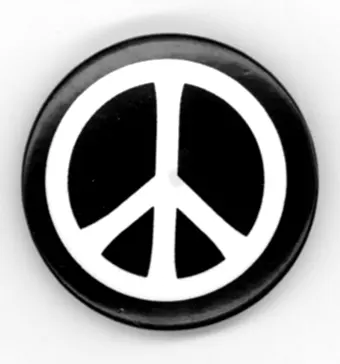
Peace Symbol: Semaphore N and D, by Its Designer's Account
Who designed the peace symbol in 1958, why Gerald Holtom said it combines semaphore N and D, his second story about Goya, and what CND says about copyright.
Picture credit
"Cnd button" by Marshall Colman — Public domain (photograph released into the public domain worldwide by its author, with an unconditional grant of use where that is not legally possible (Commons PD-self); the symbol shown is simple geometry not protected in the US (Commons PD-shape), and CND states the symbol has "quite deliberately never been copyrighted" and is free for all, https://cnduk.org/the-symbol/) — https://commons.wikimedia.org/wiki/File:Cnd_button.JPG -
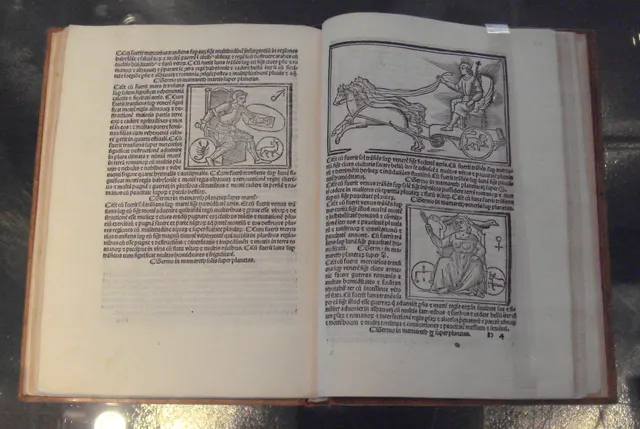
Male and Female Symbols: Linnaeus Took Them From the Planets
The male and female symbols began as the planet signs of Mars and Venus. Linnaeus made them mark father and mother plants in 1751, and ♂ also meant biennial.
Picture credit
"Translation of Albumasar Venice 1515 De Magnis Coniunctionibus" by PHGCOM — Public domain (photograph released into the public domain by its author, PHGCOM (Commons PD-self); the book shown, Abu Ma'shar's De magnis coniunctionibus printed in Venice in 1515 with unsigned woodcuts, is public domain in the US as a work published before 1931 and in the EU, where anonymous works are protected for 70 years after publication) — https://commons.wikimedia.org/wiki/File:Translation_of_Albumasar_Venice_1515_De_Magnis_Coniunctionibus.jpg -
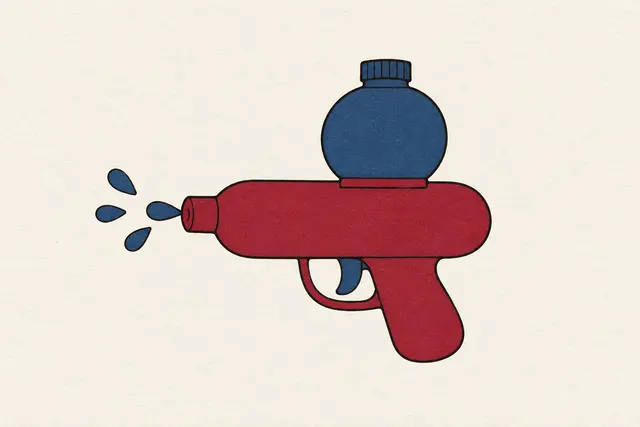
Emoji: Unicode Sets the Name and Number, Not the Picture
Unicode fixes an emoji character's code point and name; fonts draw the picture. Three open sets compared, the pistol turned water gun, and 3,963 emoji counted.
 Illustration
Picture credit
Illustration: Codes & Letters. Generated schematic image — not a photograph or historical record. Reuse: CC BY 4.0 (https://creativecommons.org/licenses/by/4.0/), to the extent any copyright exists in this image.

