Grammar
Linguistic typology for curious readers: the different ways the world's languages solve the same grammatical problem, such as ordering subject, verb and object.
4 entries
-
Word Order: English's SVO Isn't the World's Most Common
In WALS, 564 of 1,376 languages put the verb last (SOV) and 488 use English-style SVO. Count by genus and the gap widens; German has no dominant order.
 Illustration
Picture credit
Illustration: Codes & Letters. Generated schematic image — not a photograph or historical record. Reuse: CC BY 4.0 (https://creativecommons.org/licenses/by/4.0/), to the extent any copyright exists in this image. -
Thou vs You: Thou Was the Familiar Form, Not the Formal One
In Chaucer's and Shakespeare's English, thou was the familiar word and the plural ye or you the polite one. How thou faded, and where 207 WALS languages stand.
 Illustration
Picture credit
Illustration: Codes & Letters. Generated schematic image — not a photograph or historical record. Reuse: CC BY 4.0 (https://creativecommons.org/licenses/by/4.0/), to the extent any copyright exists in this image. -
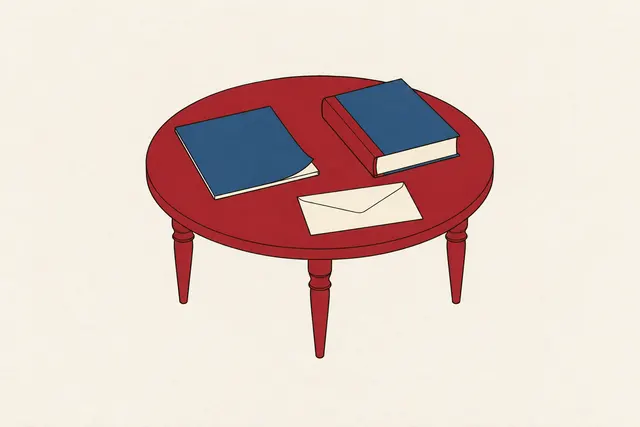
Grammatical Gender: 145 of 257 Languages in WALS Have None
In WALS, 145 of 257 languages have no grammatical gender. What gender means to a linguist, why English counts as having three, and how nouns get one.
 Illustration
Picture credit
Illustration: Codes & Letters. Generated schematic image — not a photograph or historical record. Reuse: CC BY 4.0 (https://creativecommons.org/licenses/by/4.0/), to the extent any copyright exists in this image. -
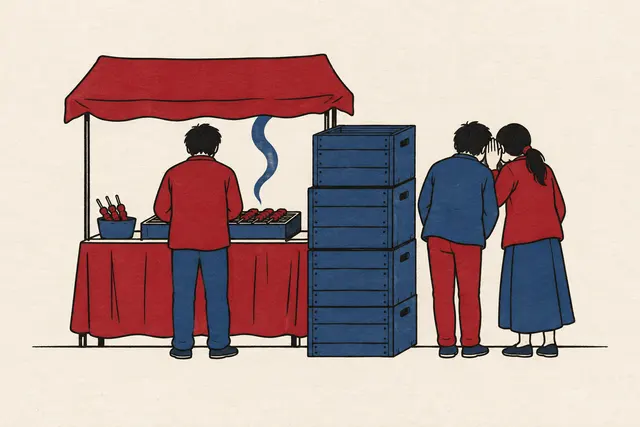
Evidentiality: When Grammar Marks How You Know
Evidentiality marks how a speaker knows: seen, inferred or heard from others. In WALS, 237 of 418 languages mark it in grammar; English has none. Map and data.
 Illustration
Picture credit
Illustration: Codes & Letters. Generated schematic image — not a photograph or historical record. Reuse: CC BY 4.0 (https://creativecommons.org/licenses/by/4.0/), to the extent any copyright exists in this image.