Latin Alphabet: How 21 Letters Became 26, and Why Z Is Last
Codes & Letters
- Published
- Last substantive revision
Writing systemSpec card
- Name
- Latin alphabet (Latin script)Source: Unicode Standard 18.0.0, chapter 7
- Type
- alphabetSource: Unicode Standard 18.0.0, Table 6-1
- Direction of writing
- left to right; some of the earliest inscriptions run right to left or boustrophedonSource: Unicode Standard 18.0.0, section 8.6; Giles, 'Alphabet', Britannica 1911
- Period of use
- from about the mid-7th century BC to todaySource: Unicode Standard 18.0.0, section 8.6
- Languages written
- Latin; today a wide variety of languages worldwideSource: Unicode Standard 18.0.0, section 7.1
- Status today
- in use; 1,653 characters with the Latin script value in Unicode 18.0.0Source: Unicode 18.0.0 Scripts.txt, this page's count
- Unicode blocks
- Basic Latin; Latin-1 Supplement; Latin Extended-A to Latin Extended-G; Latin Extended Additional; plus Latin-script characters in 9 other blocks, such as IPA ExtensionsSource: Unicode 18.0.0 Blocks.txt
latin-alphabet-spec.csv the values on this card, as CSVData: Unicode Character Database 18.0.0 (https://www.unicode.org/Public/18.0.0/ucd/), © Unicode, Inc., Unicode License v3 (https://www.unicode.org/license.txt), retrieved 2026-10-15
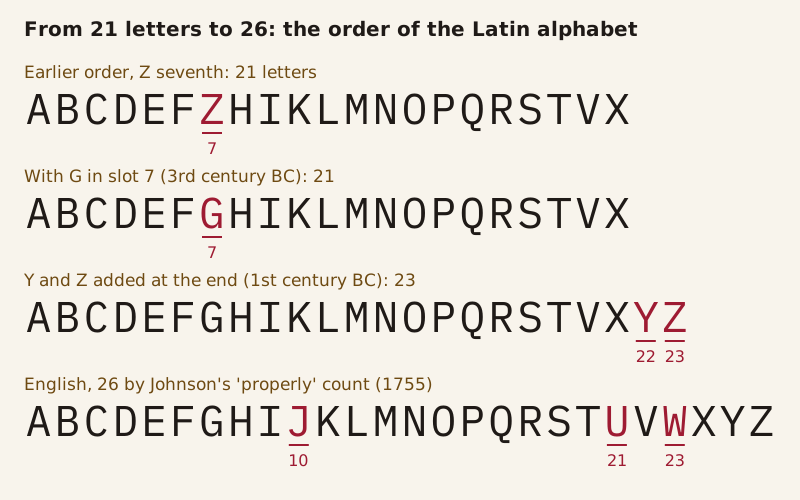
Four stages in the order of the alphabet; the first is this page's reconstruction from the 1911 Encyclopaedia Britannica. Changed letters carry their slot numbers, and dates follow the sources named here.
Z was once the seventh letter of the Latin alphabet, in the slot that G holds today. As the 1911 Encyclopaedia Britannica tells it, the Romans let Z drop out, gave its place to a new letter, and much later brought Z back at the very end, which is why it comes last. The count changed too. Cicero's dialogue on the gods speaks of 21 letters, Y and Z made 23, and J, U and W, which became separate letters long after Rome, take English to 26.
How many letters did the Latin alphabet have?
In Cicero's On the Nature of the Gods, the Stoic speaker Balbus wonders how anyone could believe that a world formed from atoms colliding by chance. He compares it to shaking out countless copies of "unius et viginti formae litterarum", the shapes of the twenty-one letters, and expecting them to land as the Annals of the poet Ennius. Cicero lived from 106 to 43 BC.
Allen and Greenough's Latin grammar of 1903 points to which 21. The Latin alphabet, it says, was the English one without J, U and W, and Y and Z came in during Cicero's time and were put at the end. The grammar cites this same passage. Take away Y and Z and 21 letters remain, A to X, with K among them.
Quintilian, a Roman teacher of the first century AD, still called X "the last letter of our alphabet" and spoke of borrowing two letters for Greek words. His 1920 translator, H. E. Butler, names the two as Y and Z.
Other counts exist. The Unicode Standard, version 18.0.0, says of the Latin alphabet that "Originally it contained only 24 capital letters," but it does not list them. Samuel Johnson's grammar of 1755, as quoted on Ryuichi Hotta's English-history blog, says English letters were "commonly reckoned twenty-four" because i and j, and u and v, had once been one character each. Each total depends on the date and on the rule for counting.
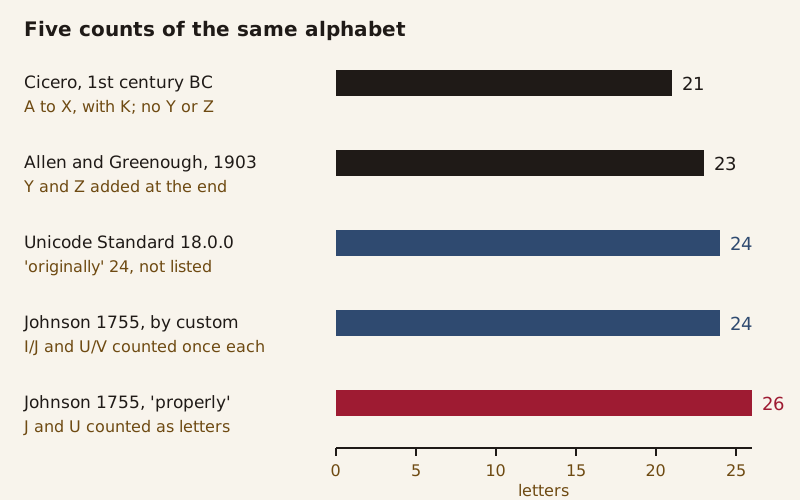
Five counts of the alphabet and the rule behind each, from Cicero's 21 to Johnson's 26. The Unicode Standard does not say which 24 letters it means.
The origin is told two ways. The Unicode Standard derives Latin from a south Etruscan model, around the mid-seventh century BC or a bit earlier; Peter Giles, in the 1911 Encyclopaedia Britannica, traced it to the alphabets of the Chalcidian Greek colonies in Italy.
In Unicode 18.0.0 the Latin script covers 1,653 characters, by this page's count, against 5,105 for Egyptian hieroglyphs. Every Writing System on One Page sets such counts side by side.
The epitaph of Lucius Cornelius Scipio Barbatus, consul in 298 BC, shows the 21 letters at work. The Vatican Museums date his sarcophagus to 280–270 BC and the epitaph on its front to around the beginning of the second century BC. By this page's count, its four lines use 18 different letters, all from the 21. V serves for both the vowel in FVIT and the consonant in VIR.
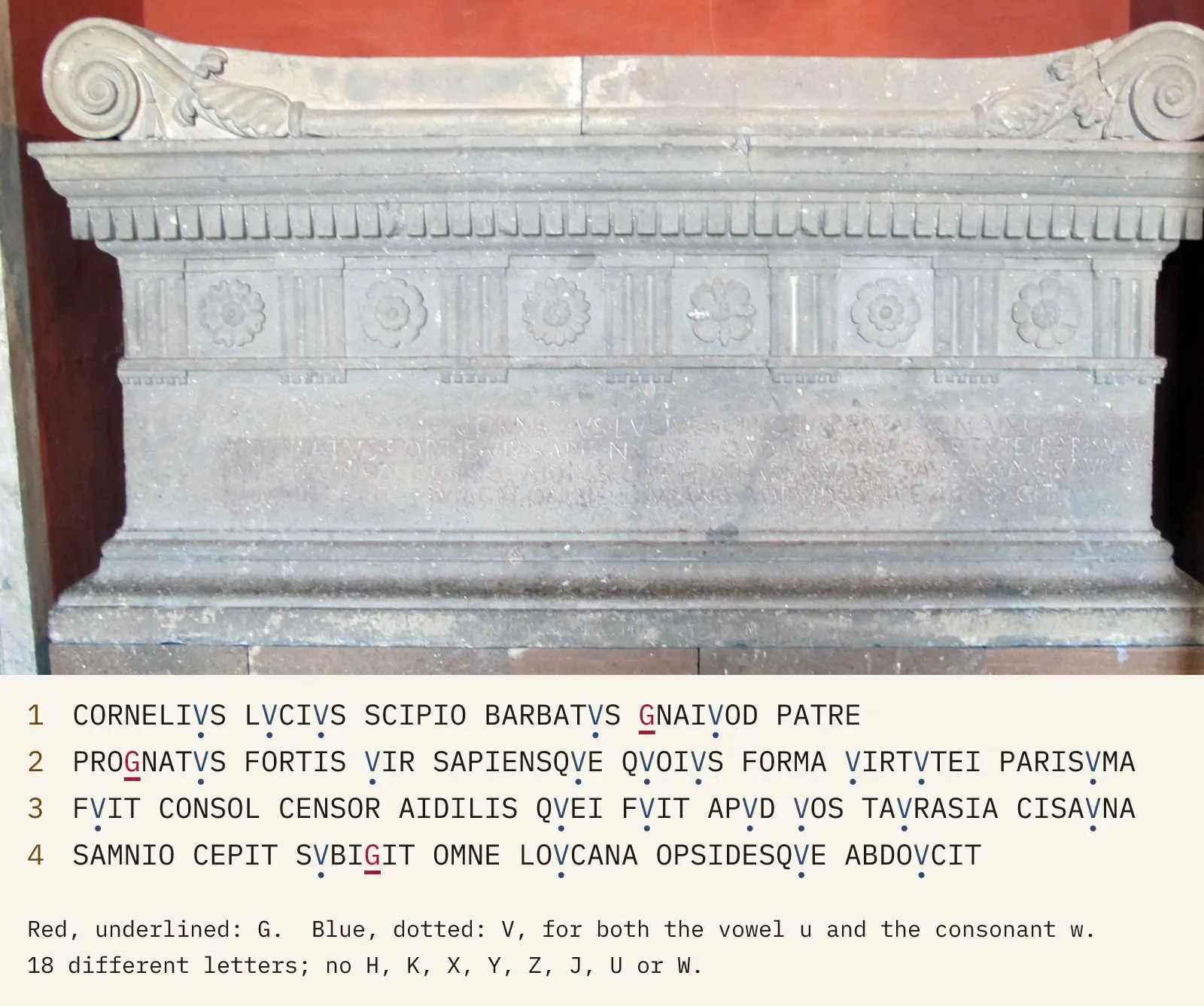
Image credit and license (full text)
"The epitaph of Scipio Barbatus, with a line-by-line transcription" by Codes & Letters, CC BY 4.0. Source: https://codesandletters.com/writing-systems/latin-alphabet/. License: https://creativecommons.org/licenses/by/4.0/. Underlying image: "Sarcofago di scipione barbato, 280 ac. 13" by Sailko — https://commons.wikimedia.org/wiki/File:Sarcofago_di_scipione_barbato,_280_ac._13.JPG — CC BY 3.0 (https://creativecommons.org/licenses/by/3.0/); modifications: cropped at the right edge to remove a museum label and a sign post, scaled to 1600 px wide, transcription panel added below the photograph.
The sarcophagus of Scipio Barbatus in the Vatican Museums, with its epitaph transcribed line by line below. G is underlined in red; V, dotted in blue, serves as vowel and consonant.
Where did G come from?
Before G existed, C did two jobs. Allen and Greenough say that C first meant G and in early Latin also stood for K, so writing did not tell the two sounds apart. The old value lived on in two abbreviations: C. for the name Gaius and Cn. for Gnaeus.
The fix was a new letter formed from C, and it took the slot that Z had held; the strokes that make up letters are named on Anatomy of a Letter. Z had fallen out of use. In the 1911 Britannica article on G, Giles says that between 450 and 350 BC the z-sound of Latin turned into r, so Papisius became Papirius, and the letter was no longer needed. He also reports that the late Roman writer Martianus Capella credits the censor Appius Claudius Caecus with removing Z in 312 BC.
Who made G, and when, is less certain. Plutarch writes that the Romans used g "only after many years" and that "Spurius Carvilius introduced" it, and elsewhere names a Spurius Carvilius, a freedman, as the first to open an elementary school. Neither passage gives a year.
 Generated illustration
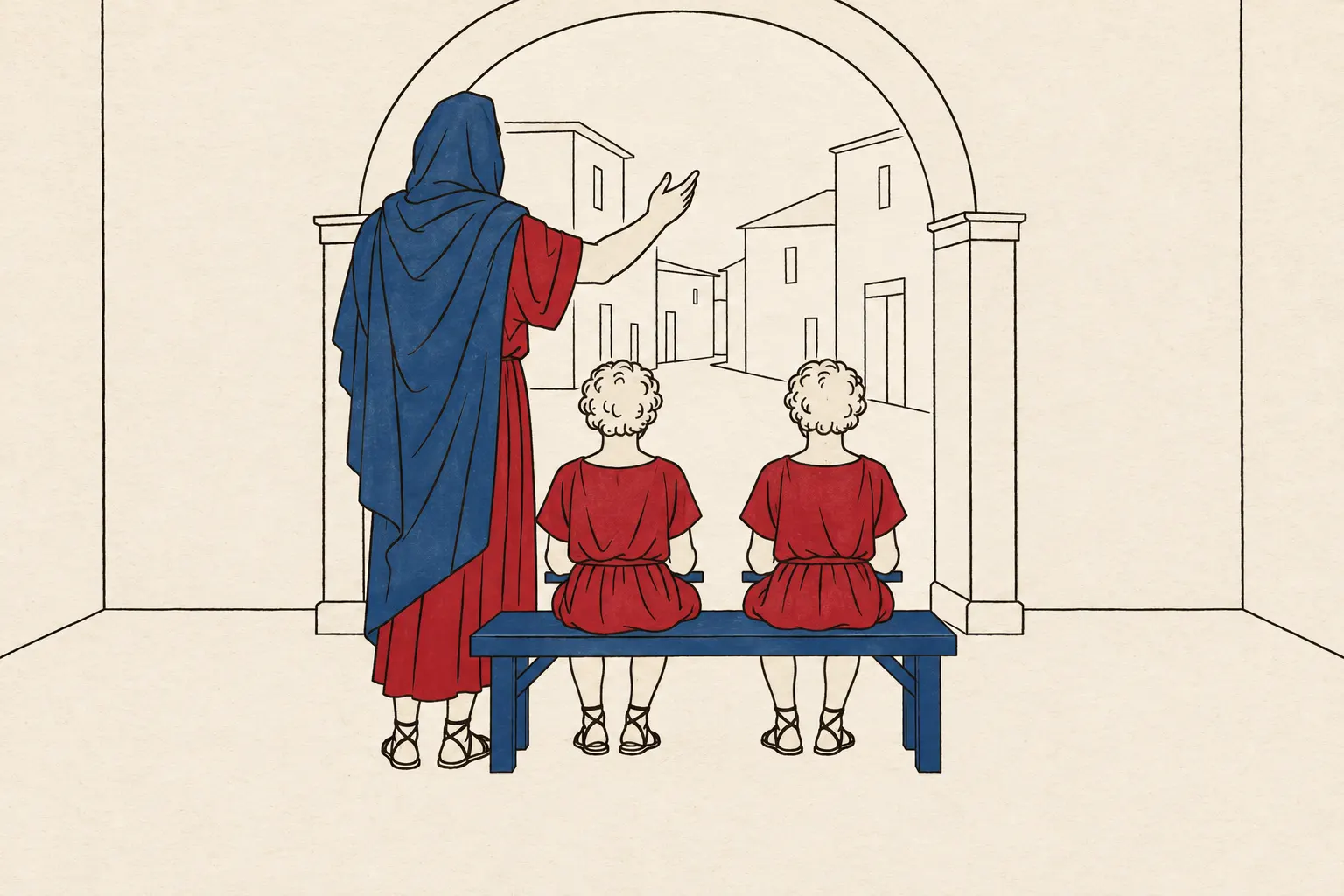
An elementary schoolroom of the kind Plutarch says a freedman, Spurius Carvilius, was the first to open; elsewhere he says a Spurius Carvilius introduced g.
Giles, citing Plutarch, put the new letter at about 293 BC and said it was not firmly established until after the middle of the third century BC; he adds that G is sometimes credited to Appius Claudius. Hotta, following a 1970 study by Tanaka, puts the split between C and G around 300 BC.
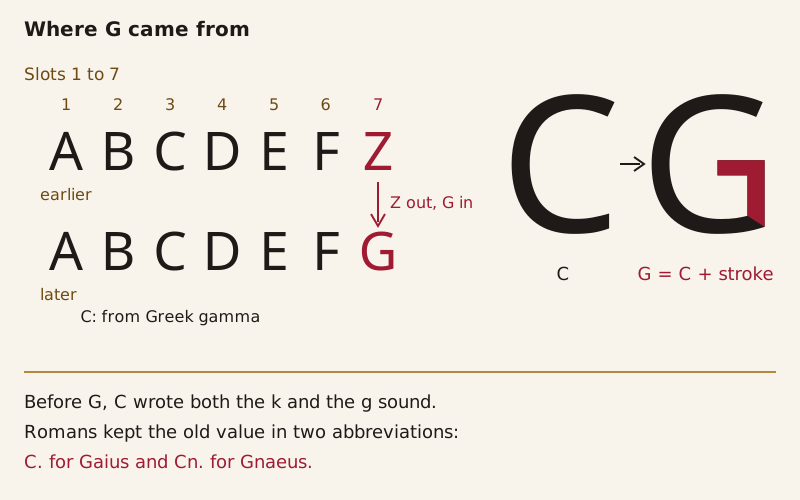
Slot 7 passed from Z to G, and G is C with a stroke added, shown in red on Noto Sans outlines.
Why is Z the last letter?
Because it came back last. Giles's 1911 article on Z says the letter sits at the end because that is where Latin put it. Once G had taken its slot, Z returned in the first century BC, at the end and alongside Y, to write the Greek letters zeta and upsilon more exactly.
Before that, Latin wrote Greek words with its own letters. The Greek word for "belt" became sona, with s for zeta, and the name Pyrrhus became Burrus, Giles notes, until the growth of literary knowledge led writers to respell such names. Even with Y and Z in use, Quintilian still called X the last of "our" letters. Augustus's cipher, which Suetonius says wrote a double A for X, is on the Caesar cipher page.
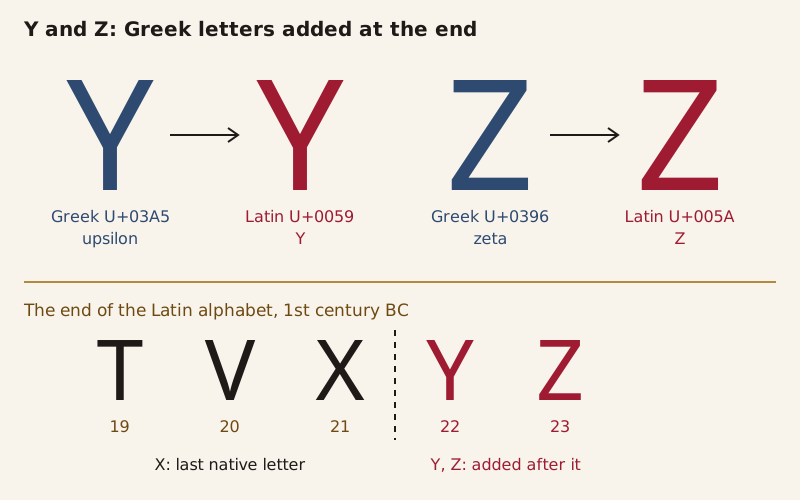
Greek upsilon and zeta beside the Latin Y and Z borrowed from them; Noto Sans draws each pair with one outline. Below, Y and Z follow X at the end.
When did J, U and W join the alphabet?
U came first as a shape. Giles describes U as a form of V developed in handwriting and found on inscriptions in Rome as early as the late second century AD.
In English, Hotta writes, the split into a vowel u and a consonant v became clear only in the 17th century and a fixed rule only in the 18th; before that either shape could stand for either sound, as in ouer for "over" and vnkind for "unkind." In 1611 Florio, as Giles quotes him, still called V "sometimes a vowel, and sometimes a consonant."
Giles says J began as a special form of "I" at the start of a word and has had a value of its own only since the 15th century.
In Rome in 1524, Giovan Giorgio Trissino printed a proposal for spelling Italian: consonant i as "uno j lungo", a long j reaching below the line, and consonant u as "uno v antico", an old-style v. Francesco Davoli, following Pio Rajna, dates it to October or November 1524. For English, Hotta puts the start of the modern habit, i for the vowel and j for the consonant, in 1630–40.
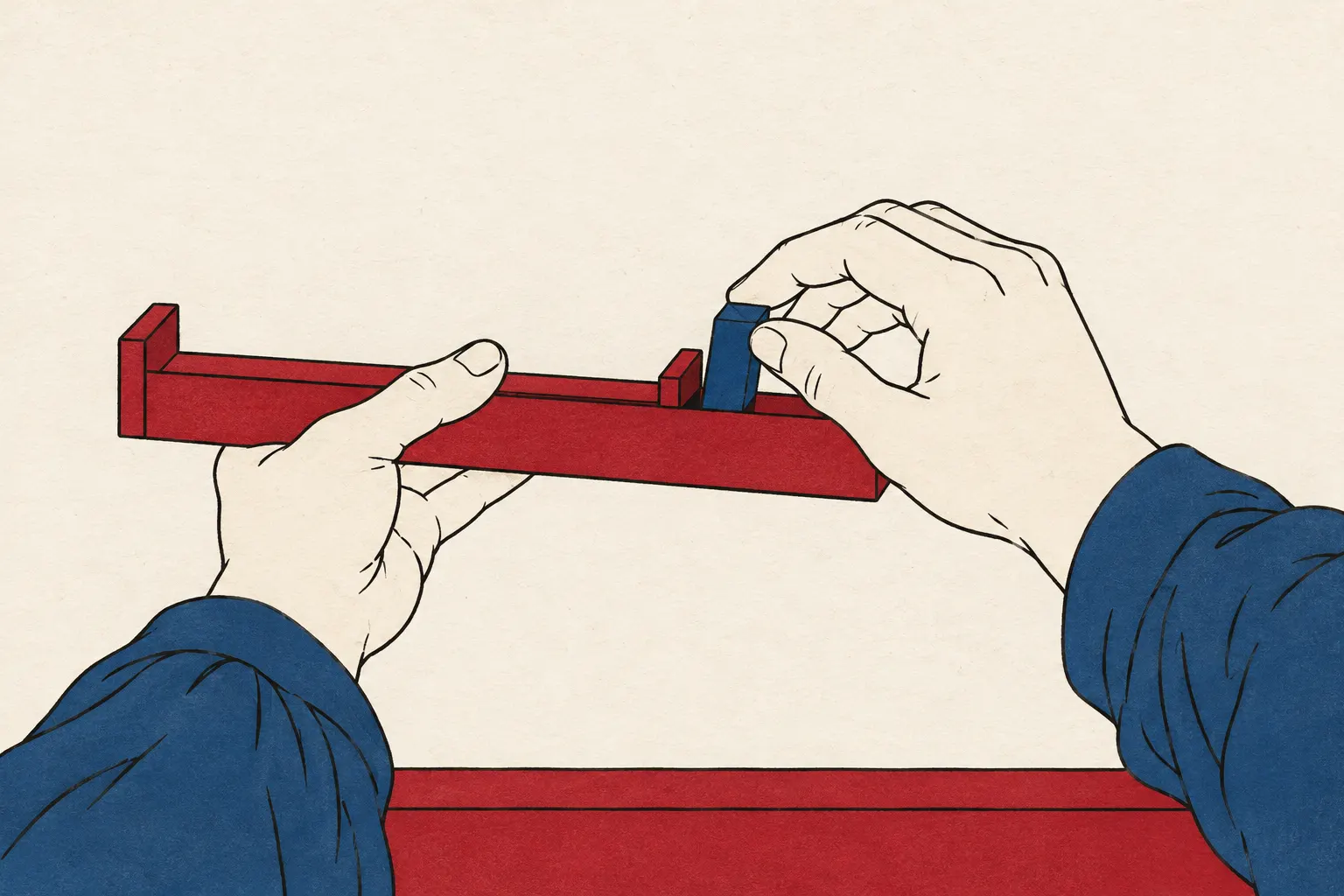
W came from doubling. Giles notes that the name tells the story: V had the vowel value u, so a "double u" wrote the consonant. Early English printers had a w type, he adds, but French printers did not, so the 1582 Rheims New Testament printed w as two v's side by side.
 Generated illustration
Early English printers had a w type, Giles writes, but French printers did not, so the 1582 Rheims New Testament printed w as two v's.
Johnson wrote in 1755 that English letters "are commonly reckoned twenty-four" but "may be properly said to consist of twenty-six letters." Hotta, citing David Crystal, says dictionaries first filed words in a 26-letter order in the 1820s. Ciphers feel the count too, since a shift wraps around after the last letter. The Vigenère cipher applies a shift at every letter.
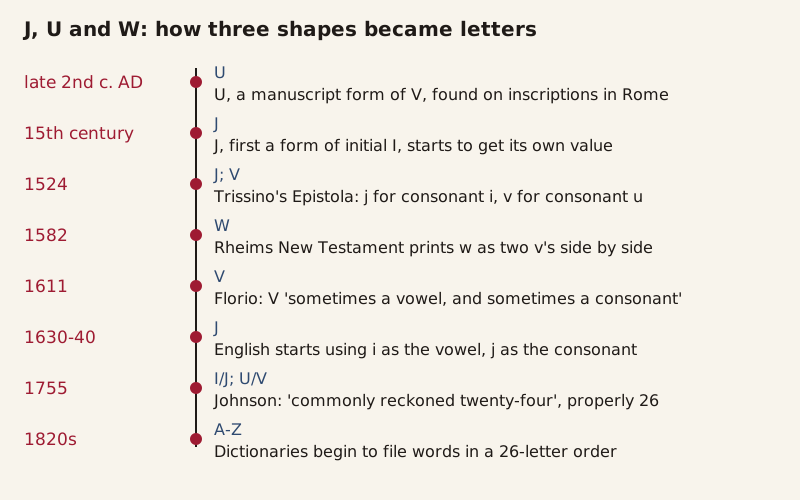
How J, U and W became letters, from Roman inscriptions to English dictionaries, in eight dated steps.
What do the spare letters still cost?
This site calls the irregularities that a writing system piles up over time, and that readers still spend effort learning, letter debt. Think of it as an old debt that each new reader pays part of. The term is used only when three things can be shown with sources: a cause, a cost today and a job the spelling still does. One sound written with c, k and q meets that test.
The cause runs back to the Etruscans. Hotta, following Tanaka, writes that Etruscan picked C, K or Q by the next vowel, and that the surplus was passed on. The Unicode Standard's reconstructed names for the three are KE, KA and KU. Latin settled on C for most words, kept K for a few such as Kalendae and wrote Q before V.
After the Norman Conquest, Hotta writes, quoting the Oxford English Dictionary, English spelling gradually came to keep c before a, o, u, l and r and to write k before e, i and y. Giles adds that from the 13th century English also gave c the sound of s before e, i and y.
The cost is still paid. Writing the k sound in modern English means choosing among at least c, k and qu, Hotta notes. A reader must also know that c sounds like s before e and i, as in city, and like k before a, o and u, as in calm; both examples come from an 1812 printing of Johnson's grammar.
The spelling still does work. Johnson noted that the two sounds of c could be written with s and k, but that c "preserves to the eye the etymology of words, as face from facies, captive from captivus." And k, he wrote, goes before e and i "where, according to English analogy, c would be soft," as in kept and king. This site reads these spellings as history and takes no side on spelling reform.
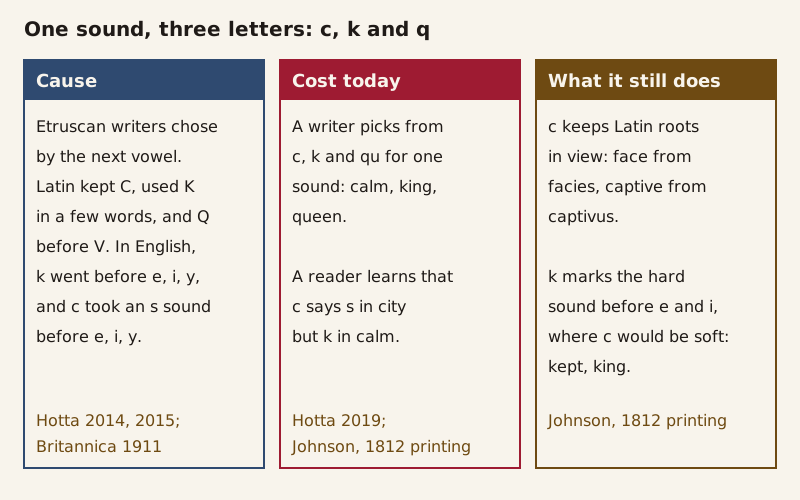
One sound, three letters: why c, k and q all write the k sound, what that costs readers today and what the spelling still does.
For an alphabet that the Unicode Standard says may owe something to an alphabet of northern Italy, go next to the Elder Futhark.
Sources
- 1
Cicero, De natura deorum 2.93 (Latin text), Latin Wikisource.
https://la.wikisource.org/wiki/De_natura_deorum/Liber_II (book 2, section 93)
- 2
Quintilian, Institutio Oratoria 1.4.7–10, trans. H. E. Butler (Loeb Classical Library, vol. I, 1920; public domain), LacusCurtius, ed. Bill Thayer.
https://penelope.uchicago.edu/Thayer/E/Roman/Texts/Quintilian/Institutio_Oratoria/1B*.html (book 1, chapter 4, sections 7–10, with the translator's notes)
- 3
Plutarch, Roman Questions 54 and 59 (Moralia 277D, 278E), trans. Frank Cole Babbitt (Loeb Classical Library, Moralia vol. IV, 1936), LacusCurtius, ed. Bill Thayer.
https://penelope.uchicago.edu/Thayer/E/Roman/Texts/Plutarch/Moralia/Roman_Questions*/C.html (questions 54 and 59)
- 4
Suetonius, The Lives of the Caesars, "The Deified Augustus" 88, trans. J. C. Rolfe (Loeb Classical Library, 1913; public domain), LacusCurtius, ed. Bill Thayer.
https://penelope.uchicago.edu/Thayer/E/Roman/Texts/Suetonius/12Caesars/Augustus*.html (section 88)
- 5
Giovan Giorgio Trissino, Epistola de le lettere nuovamente aggiunte ne la lingua italiana (Rome: Lodovico degli Arrighi, 1524), Italian Wikisource transcription.
https://it.wikisource.org/wiki/De_le_lettere_nu%CF%89vamente_aggiunte_ne_la_lingua_Italiana (full text)
- 6
Samuel Johnson, "A Grammar of the English Tongue," prefixed to A Dictionary of the English Language (1755); text of the 1812 abridged edition, Project Gutenberg eBook #15097.
https://www.gutenberg.org/ebooks/15097 (the opening section on the letters and the entries for C, K and Q)
- 7
Vatican Museums, "Sarcofago of Scipione Barbato" (Museo Pio-Clementino, Cat. 1191).
- 8
The Unicode Consortium. Unicode Character Database, version 18.0.0: UnicodeData.txt, Blocks.txt and Scripts.txt.
https://www.unicode.org/Public/18.0.0/ucd/ (data files)
- 9
The Unicode Consortium. The Unicode Standard, Version 18.0.0 (South San Francisco: The Unicode Consortium, 2026. ISBN 978-1-936213-36-8), core specification.
https://www.unicode.org/versions/Unicode18.0.0/core-spec/ (the chapter 7 introduction and section 7.1; sections 8.6 and 8.7 and the chapter 8 introduction; Table 6-1)
- 10
William Smith (ed.), A Dictionary of Greek and Roman Biography and Mythology (London: John Murray, 1848; 1873 printing), "Scipio" no. 5 (L. Cornelius Scipio Barbatus), footnote printing the epitaph "taken from Orelli (Inscr. No. 550)"; Perseus Digital Library TEI edition.
https://github.com/PerseusDL/canonical-pdlrefwk/blob/b0ec56ab1608425478c08855728a16b9092f0c04/data/viaf88890045/003/viaf88890045.003.perseus-eng1.xml (entry "Scipio" no. 5 with its footnote)
- 11
J. H. Allen and J. B. Greenough, New Latin Grammar, ed. J. B. Greenough, G. L. Kittredge, A. A. Howard and B. L. D'Ooge (Boston: Ginn, 1903), section 1, "The Alphabet"; online edition ed. Meagan Ayer, Dickinson College Commentaries, 2014.
https://dcc.dickinson.edu/grammar/latin/alphabet (section 1 with its notes)
- 12
Peter Giles, "Alphabet," Encyclopaedia Britannica, 11th ed., vol. 1 (Cambridge: Cambridge University Press, 1911); Wikisource transcription.
https://en.wikisource.org/wiki/1911_Encyclop%C3%A6dia_Britannica/Alphabet (full article)
- 13
Peter Giles, "C," Encyclopaedia Britannica, 11th ed., vol. 4 (Cambridge: Cambridge University Press, 1911); Wikisource transcription.
https://en.wikisource.org/wiki/1911_Encyclop%C3%A6dia_Britannica/C (full article)
- 14
Peter Giles, "G," Encyclopaedia Britannica, 11th ed., vol. 11 (Cambridge: Cambridge University Press, 1911); Wikisource transcription.
https://en.wikisource.org/wiki/1911_Encyclop%C3%A6dia_Britannica/G (full article)
- 15
Peter Giles, "Q," Encyclopaedia Britannica, 11th ed., vol. 22 (Cambridge: Cambridge University Press, 1911); Wikisource transcription.
https://en.wikisource.org/wiki/1911_Encyclop%C3%A6dia_Britannica/Q (full article)
- 16
Peter Giles, "Y," Encyclopaedia Britannica, 11th ed., vol. 28 (Cambridge: Cambridge University Press, 1911); Wikisource transcription.
https://en.wikisource.org/wiki/1911_Encyclop%C3%A6dia_Britannica/Y (full article)
- 17
Peter Giles, "Z," Encyclopaedia Britannica, 11th ed., vol. 28 (Cambridge: Cambridge University Press, 1911); Wikisource transcription.
https://en.wikisource.org/wiki/1911_Encyclop%C3%A6dia_Britannica/Z (full article)
- 18
Peter Giles, "U," Encyclopaedia Britannica, 11th ed., vol. 27 (Cambridge: Cambridge University Press, 1911); Wikisource transcription.
https://en.wikisource.org/wiki/1911_Encyclop%C3%A6dia_Britannica/U (full article)
- 19
Peter Giles, "J," Encyclopaedia Britannica, 11th ed., vol. 15 (Cambridge: Cambridge University Press, 1911); Wikisource transcription.
https://en.wikisource.org/wiki/1911_Encyclop%C3%A6dia_Britannica/J (full article)
- 20
Peter Giles, "V," Encyclopaedia Britannica, 11th ed., vol. 27 (Cambridge: Cambridge University Press, 1911); Wikisource transcription.
https://en.wikisource.org/wiki/1911_Encyclop%C3%A6dia_Britannica/V (full article)
- 21
Peter Giles, "W," Encyclopaedia Britannica, 11th ed., vol. 28 (Cambridge: Cambridge University Press, 1911); Wikisource transcription.
https://en.wikisource.org/wiki/1911_Encyclop%C3%A6dia_Britannica/W (full article)
- 22
Albert Curtis Clark, "Cicero," Encyclopaedia Britannica, 11th ed., vol. 6 (Cambridge: Cambridge University Press, 1911); Wikisource transcription.
https://en.wikisource.org/wiki/1911_Encyclop%C3%A6dia_Britannica/Cicero (full article)
- 23
James Smith Reid, "Quintilian," Encyclopaedia Britannica, 11th ed., vol. 22 (Cambridge: Cambridge University Press, 1911); Wikisource transcription.
https://en.wikisource.org/wiki/1911_Encyclop%C3%A6dia_Britannica/Quintilian (full article)
- 24
Francesco Davoli, "«Reviʃta con diligεntia, ε corrεtta». Prassi correttoria e normalizzazione ortografica fra la prima e la seconda stampa della Canzone e della Sophonisba di Trissino," Prassi Ecdotiche della Modernità Letteraria 5/I (2020): 5–20, https://doi.org/10.13130/2499-6637/13155.
https://doi.org/10.13130/2499-6637/13155 (full text)
- 25
Ryuichi Hotta, "#373. <u> と <v> の分化 (1)," hellog (blog on the history of English), 2010-05-05.
https://user.keio.ac.jp/~rhotta/hellog/2010-05-05.html (full post)
- 26
Ryuichi Hotta, "#1650. 文字素としての j の独立," hellog (blog on the history of English), 2013-11-02.
https://user.keio.ac.jp/~rhotta/hellog/2013-11-02.html (full post)
- 27
Ryuichi Hotta, "#1824. <C> と <G> の分化," hellog (blog on the history of English), 2014-04-25, citing Tanaka 1970.
https://user.keio.ac.jp/~rhotta/hellog/2014-04-25-1.html (full post)
- 28
Ryuichi Hotta, "#2367. 古英語の <c> から中英語の <k> へ," hellog (blog on the history of English), 2015-10-20, quoting the Oxford English Dictionary.
https://user.keio.ac.jp/~rhotta/hellog/2015-10-20-1.html (full post, including its quotation from the Oxford English Dictionary entry for K)
- 29
Ryuichi Hotta, "#3049. 近代英語期でもアルファベットはまだ26文字ではなかった?," hellog (blog on the history of English), 2017-09-01, citing David Crystal 2012.
https://user.keio.ac.jp/~rhotta/hellog/2017-09-01.html (full post)
- 30
Ryuichi Hotta, "#3649. q の後には必ず u が来ますが,これはどういうわけですか?," hellog (blog on the history of English), 2019-04-24.
https://user.keio.ac.jp/~rhotta/hellog/2019-04-24-1.html (full post)
Download the data: letter orders, before G to 26 letters (CSV) (Data: Unicode Character Database 18.0.0 (https://www.unicode.org/Public/18.0.0/ucd/), © Unicode, Inc., Unicode License v3 (https://www.unicode.org/license.txt), retrieved 2026-10-15) · J, U and W timeline (CSV)
Corrections
No corrections yet. Report an error through the corrections address in the page footer; every change is logged here as YYYY-MM-DD — what changed and why.
Decode next:
- Elder Futhark: the runic row, whose letter order the Unicode Standard calls the most conspicuous difference from the Latin alphabet.
- Caesar Cipher: Augustus's one-place shift, which Suetonius says wrote a double A for X.
Cite this page
Codes & Letters. “Latin Alphabet: How 21 Letters Became 26, and Why Z Is Last.” Codes & Letters. Published 2026-10-16. Last substantive revision 2026-10-16. https://codesandletters.com/writing-systems/latin-alphabet/. Accessed [the date you read it].